


Find out more about sectoral transition plans for a 360-degree view of the challenges of the transition
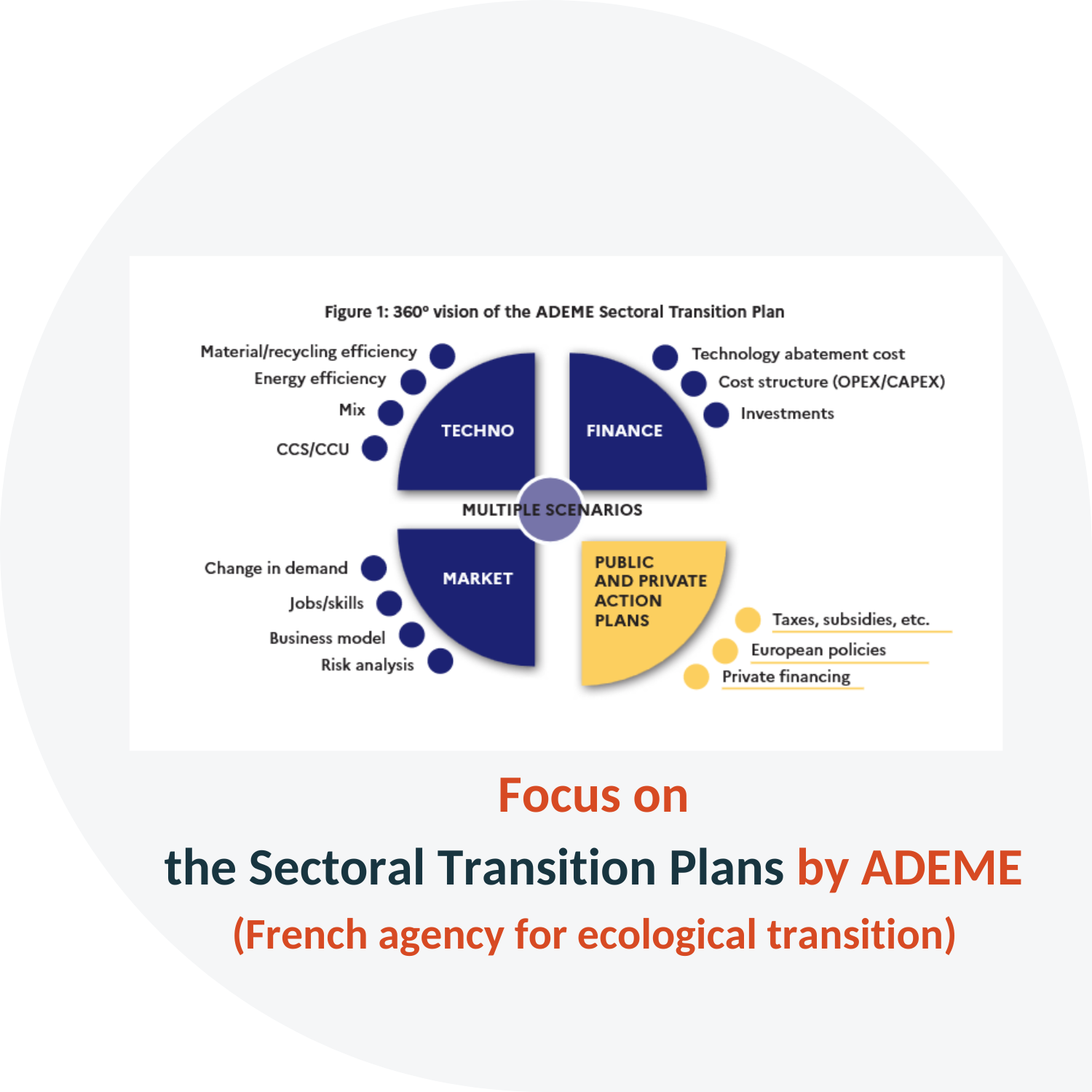

Sectoral Transition Plans (STPs) aim to map out, at the level
of a given sector, the transition pathway towards a low-carbon, resilient and sustainable economy.
They serve as a key framework for steering the ecological transition, enabling overarching climate objectives to be translated into concrete, coordinated and measurable actions at sectoral level, and form part of national and international climate commitments. in particular those arising from the Paris Agreement, and contribute to achieving the carbon neutrality targets by 2050.
The main objectives of the PTS are:
- to break down climate targets at sectoral level;
- to identify the decarbonisation measures specific to each sector;
- to map out a path of gradual transformation that is compatible with economic, social and technological constraints;
- to ensure consistency in public policies and investment.
What sort of content?
A sectoral transition plan generally comprises:
- an initial assessment of greenhouse gas emissions and energy dependencies;
- the definition of transition scenarios;
- the identification of operational measures (technological, regulatory, organisational);
- an implementation timetable, together with monitoring and evaluation indicators.
What is the range?
The PTS are aimed at all stakeholders within a sector (economic actors, public authorities, local authorities, etc.) and are designed to guide decisions on investment, innovation and regulation.